
OmniObserve
Revealing Hidden Consensus in Online Meetings

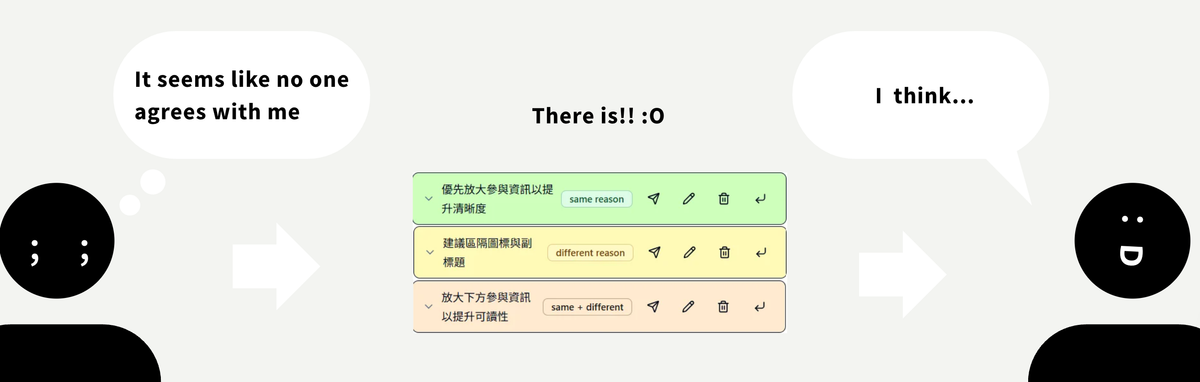
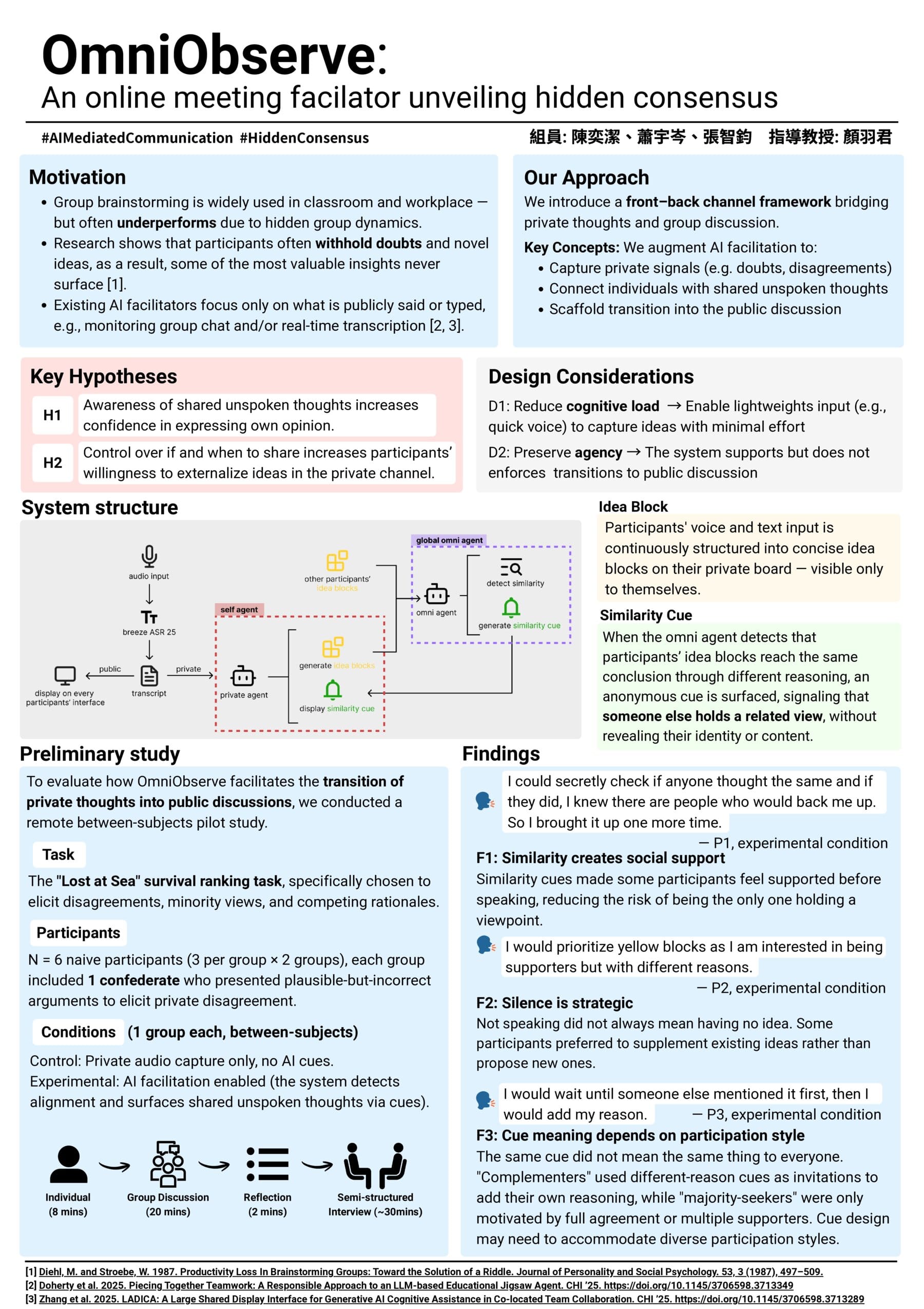
In online meetings, participants may hold back minority opinions or tentative ideas when they anticipate evaluation or lack evidence that others share similar reasoning. OmniObserve is an online meeting system that captures private thoughts as idea blocks, detects compatible reasoning across participants, and delivers anonymous similarity cues without intervening in public discussion.
A fourth moment
Online meetings that seek diverse perspectives create a recurring bottleneck at the boundary between private reflection and public contribution. Existing systems mostly support public idea organization, visible discussion-time intervention, or private AI evaluation before sharing. OmniObserve targets a fourth moment: one participant has a private idea, a peer may hold a compatible private idea, and the first participant is deciding whether to speak.
We use hidden consensus to mean overlap among participants’ private, unshared thoughts, and pre-public social evidence to mean a lightweight signal that such overlap may exist before anyone decides whether to speak.
The system
Private speech or typed input is transcribed and summarized into idea blocks: concise, editable cards visible only to the originating participant. A global agent matches blocks across participants: it restricts candidates to peer blocks on the same task item, filters by semantic similarity (0.7 cosine threshold), and sends the rest to an LLM classifier that requires a compatible ranking stance or practical recommendation.
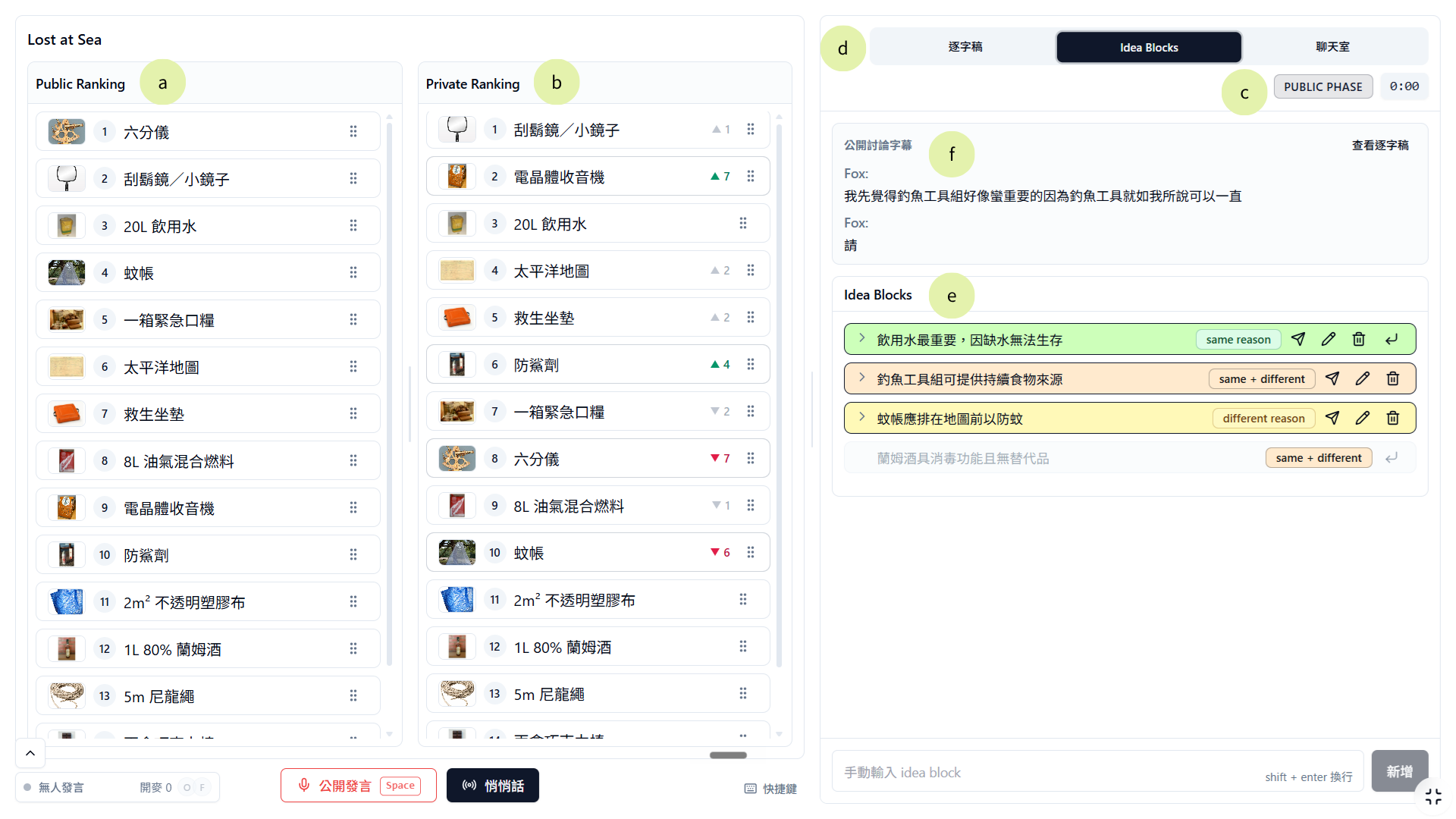
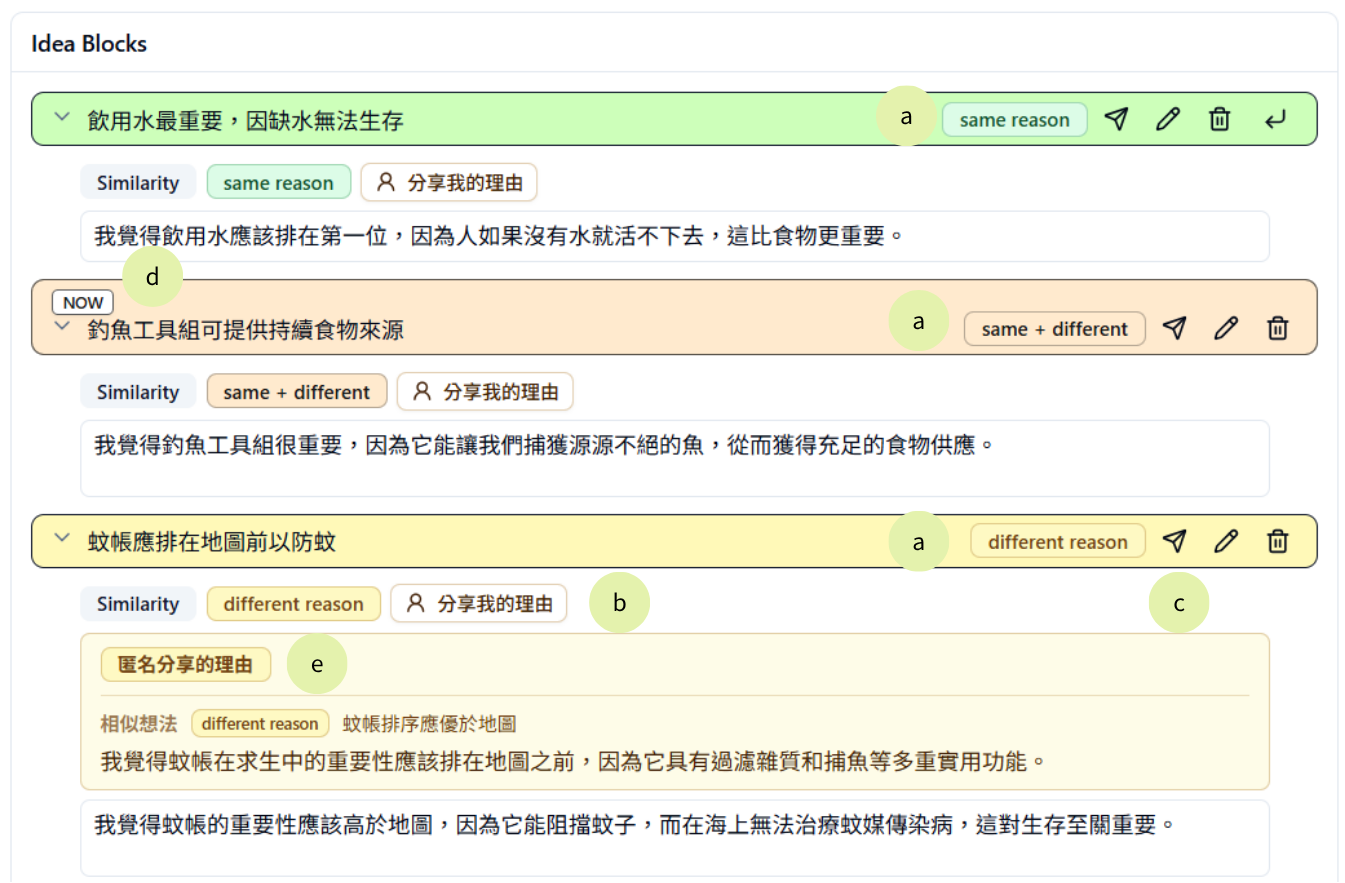
Accepted matches are delivered as anonymous similarity cues. Participants can inspect the matched relationship, dismiss the cue, share a cue-scoped reason with the anonymous counterpart, send their own idea block to public chat, or do nothing. The counterpart’s full private content always remains hidden.
A compatible peer idea with a similar rationale.
A compatible idea with a different rationale.
An idea holding both relations.
Two formative studies
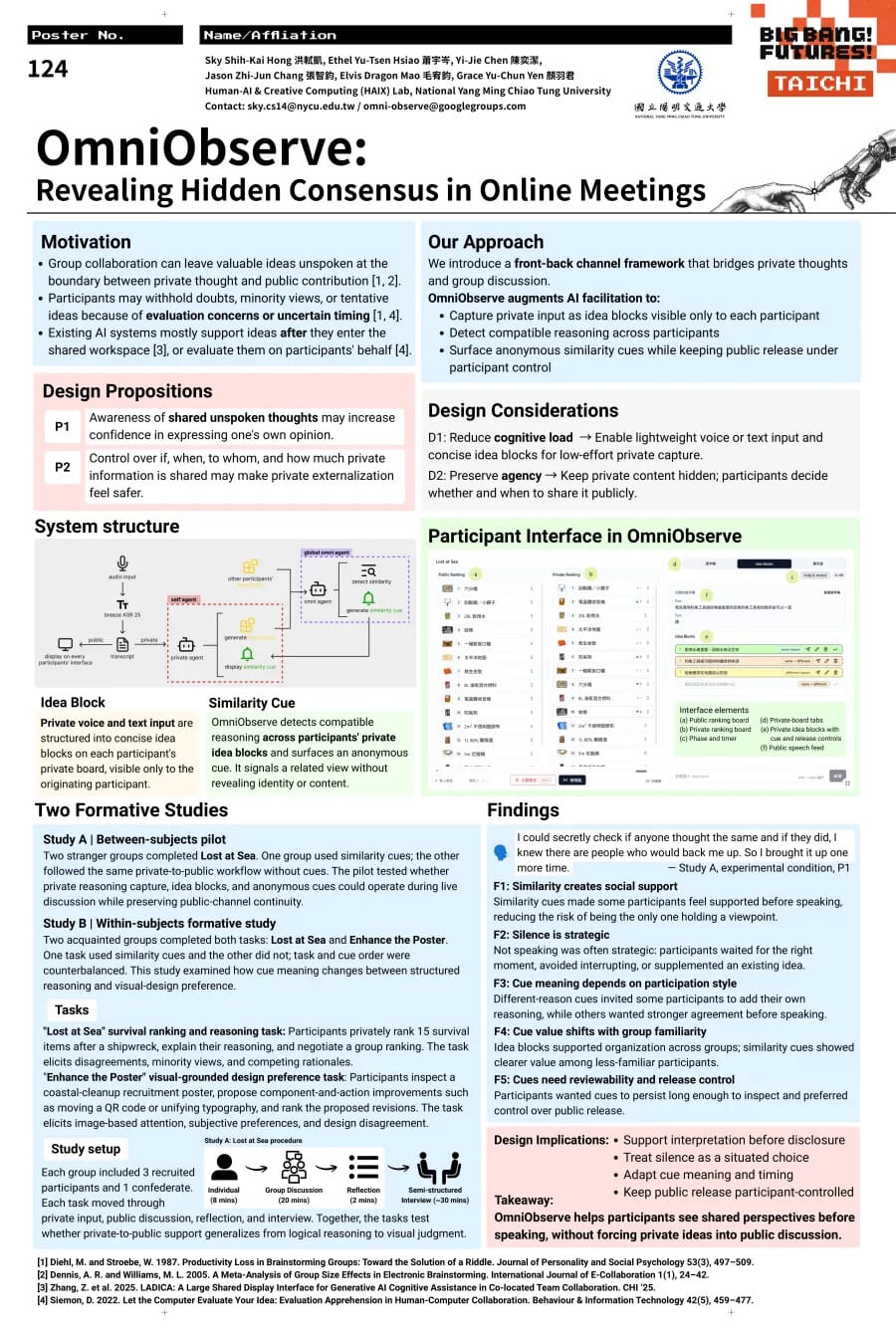
Study A was a between-subjects pilot on the Lost at Sea consensus exercise: one stranger group ran without cues and one with cues enabled. Study B was a within-subject study: each group experienced one task with similarity cues and one without, across Lost at Sea (a reasoning task) and Enhance the Poster (a visual-design task). Each session had three real participants and one confederate who introduced a plausible public stance.
High ratings clustered around release control, the private-then-public flow supporting participation, and cue-related recognition and willingness to share. Five key findings:
The central lesson is staged release control: define what AI detects, when it appears, who receives it, and who can move it public. Next, we plan an open ideation task, transcript-linked uptake analysis, and larger comparative studies.
Posters
Citation
@inproceedings{hong2026omniobserve,
  title     = {OmniObserve: Revealing Hidden Consensus in Online Meetings},
  author    = {Hong, Shih-Kai and Hsiao, Ethel Yu-Tsen and Chen, Yi-Jie and
               Chang, Jason Zhi-Jun and Mao, Elvis Dragon and Yen, Grace Yu-Chun},
  booktitle = {TAICHI 2026 Poster Track},
  address   = {Taipei, Taiwan},
  year      = {2026}
}